Wednesday, 14 November 2018

More festivals ... and more temples ...!

This time of the year marks the end of the monsoon period. Crops are being harvested and it is the time of the year when the two biggest Nepalese festivals are celebrated. These are Dashain (sp?) and Tihar (also called Deepawali).

Crops like millet and rice are ready for harvesting:

Enormous bamboo swings appear in vacant blocks and public areas during Dashain:

People plant out winter veggies in their garden:

... and there is much dancing in the street:

The Tihar festival lasts 5 days and is a public holiday. It is called the festival of lights since small oil lamps are traditionally lit inside and outside houses to illuminate them at night. Nowadays, strings of small electric bulbs are hung down the sides of buildings.

These are the lights on a hotel I visited in Kathmandu:

... and here I am with more lights suspended in Thamel:

People make patterns on the floor with coloured rice, dry flour, sand and flower petals:

I travelled to Kathmandu during Tihar and caught up with some of the other Australian volunteers there. This was a very enjoyable time for me ... since I hadn't socialised with any other expats for over a month!

I visited two spiritually important and ancient Buddhist temple complexes in Kathmandu.

The first one was Swayambunath. This is also called the Monkey Temple ... coz there are heaps of monkeys there:

It is situated high atop a hill with beautiful views over the city:

The all seeing eyes of Buddha look down from above the large white domed stupa:

Evidence of damage caused by the earthquake that devastated Nepal 3 years ago can be seen in some of the buildings.

This brick pillar still holds up the roof of the building adjacent to where I ate lunch!

The other temple I visited is Boudhanath. It also has the all seeing eyes of Buddha looking over everyone:

... and lots of prayer flags ...

This person is walking along a wall of prayer wheels, spinning each one as he passes, to send blessings out to the world.

Boudhanath is not far from Pashupatinath temple complex that I visited soon after arriving in Nepal (see 17th August post: A Tour of Kathmandu).


I am always amazed by the intricate carvings on the walls and roof of Hindu temples. Some of these are quite erotic. I overheard one tour guide explain that Hindu parents don't talk about sex with their children. He suggested that this is unnecessary since the carvings provide all the sex ed they need. 


I can only assume that Hindus have very active and varied sex lives!


Namaste!


Tuesday, 23 October 2018

A trek to Rara Lake

The biggest annual festival in Nepal is Dassain ( ... not sure of the English spelling. It seems to vary). This happens every October. I decided it would be a good time to take a holiday since the Veterinary Teaching Hospital closes for a couple of weeks.

I haven’t seen blue sky since arriving 2 months ago. And, I haven’t been away from a crowded city, except when I am at work. So, I want to go somewhere with no pollution and off the beaten track. I chose Rara Lake.

This is in the Karnali region which is in the western Himalayan foothills.  It is about 3000 metres high and not easy to get to. Firstly, I had to take a 10 hour bus trip followed by a short flight to Jumla. Then; a 3 - 4 day trek through the mountains, walking about 6 hours every day. Then about the same amount of trekking over a different return route.


I hired a porter to carry my backpack ... and to prevent me getting lost!

His name is Dorje and he doesn’t speak any English. We managed to communicate with my little Nepali ... and lots of gesturing!

Here we are near the top of one of several summit passes we needed to cross to get to the lake..


Yes. You are right. He is only wearing an old suit and a pair of tennis shoes!

Our route took us along deep valleys before ascending steeply up and over a pass and down into the next valley.

We met locals on their way to attend their livestock or small terraced fields.


Our accommodation was in very basic ‘tea rooms’. These are actually private houses where the owners will prepare a meal and somewhere to sleep for travellers. There is no signage but Dorje seems to know which houses to stop at.

They are quite primitive.  There is no plumbing. No electricity (except a few with solar panels) ... and an outside toilet.  Cooking is done on a clay or forged iron wood-fired stove with room for one or two saucepans or a frying pan. Smoke is designed to go up a chimney flue ... but much escapes into the room. There is probably more pollution inside these kitchens than many busy streets!

Here you can see the lady of the house squatting by the fireplace, kneading dough to make roti breads. Everything is prepared on the floor.


These small houses cling to the mountain side either individually or in groups. 


They are usually 2 storeys high with the family living in the upper level, above the animals. This is a good practical design since the warm air produced by the livestock will rise and remove some chill from the floor above during the winter months. 


The roof can be flat to lay out hay or seeds to dry in the sun.


Rara Lake is serene and peaceful. It is Nepal’s largest and deepest lake.


The view is even better looking down from Murmu Top (3726m); one of the mountains that cradle the lake.


... and how about this one where the mountains are reflected on the surface like a mirror?


One one occasion, we met a weather beaten lady and her granddaughter when descending back to the lake.  Dorje spoke to her and she produced a faecal pellet from a pocket hidden in the recesses of her dress. Dorje bought this for 100 Nepali rupees. However, I remain un-enlightened. No amount of gesturing between us could explain the reason for the transaction ... but Dorje seemed happy with his purchase. The pellet was bullet shaped and about the size that would be produced by a large rodent or very small herbivore.

One of the trek highlights was walking through ancient forests. These were a mixture of conifer and deciduous trees as well as cold weather flowers and local medicinal plants. The air in these forests seemed especially invigorating.

Here is an enchanting section of forest. Can you see the two wild boar grazing in the sunlight?


Almost at one of the tops:


This is where we stopped for lunch one day. The occupant earned her living from selling herbs she collected and mixed together to make local tea.


We passed lots of simple religions cairns on the way:


Dorje also enjoyed the trek tremendously and presented me with a cake on our return:


I was supposed to fly out the next afternoon ... but was stranded for another 3 days! So here are some more photos I took:


The End !


Saturday, 6 October 2018

Local food

There are 2 common food dishes in Nepal: Dal Bhat, and Momos.

Dal Bhat is basically a dish of lentil soup accompanied by rice. This is by far the most common meal ... and is often eaten a couple of times every day. 

Momos are small pastries with a variety of fillings: either vegetarian or meat.

Here’s a photo of a dish of Momos. They are usually steamed, but sometimes deep-fat fried ... and served with a spicy sauce to dip them in. Most plates and tumblers are made from stainless steel. These are more likely to survive rough handling and washing than ceramic ware!


Ingredients used to prepare the meals are readily available from local markets. These are held once or twice weekly, although there are also some in the centre of town that are open daily. There’s lots of colour and vitality at the markets. This photo was taken at my local market. The stalls are set out under a dozen lines of corrugated iron roofing to provide some protection from the sun and rain.


There are lots of different chillies ...


... and spices ...


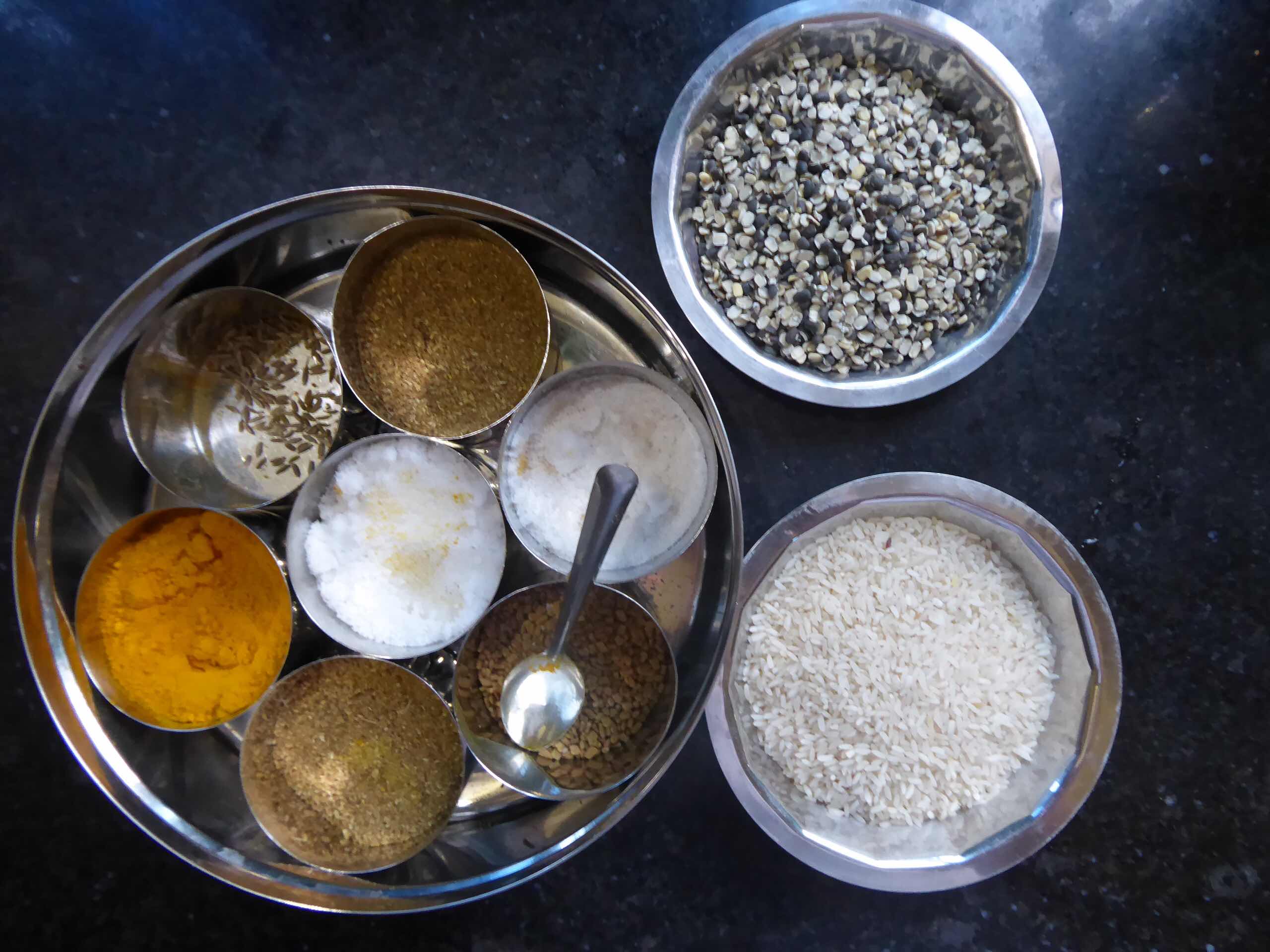
My host family was away for several days so I did my own shopping and cooking. Here are the ingredients for my Dal Bhat. Are these string beans? Check the length. How long is a piece of string ... ?


... and the spices ...


... and the final product ...


The rice and dal are cooked in pressure cookers. Every house has at least one. I don’t know why we don’t use them more in Australia. They reduce cooking time heaps ... and are more energy efficient then regular saucepans. The only problem is that there is a tendency to forget how long they have been on the heat ... and over cook the contents! 


Another reason may be fear. I remember my mother had a pressure cooker. It would sit on the cooktop and intermittently scream out menacing hisses of steam. We were always warned to stay out of the kitchen whenever it was being used ... in case it would explode! 

I am assured this rarely happens in Nepal.

Thursday, 27 September 2018

My transport ... a motorcycle ... and (un)sexy stockings ...

The Veterinary Teaching Hospital, where I work, is part of the Faculty of Animal Science, Veterinary Science, and Fisheries. This, in turn, is part of the Agriculture and Forestry University (AFU) situated just outside the small rural village of Rampur.

I live in a home-stay about 8 kilometres away in the outskirts of Bharatpur which has a population of about 280,000 people. There are also lots of buffalo, goats and cows around where I live ... but I don’t know how many.

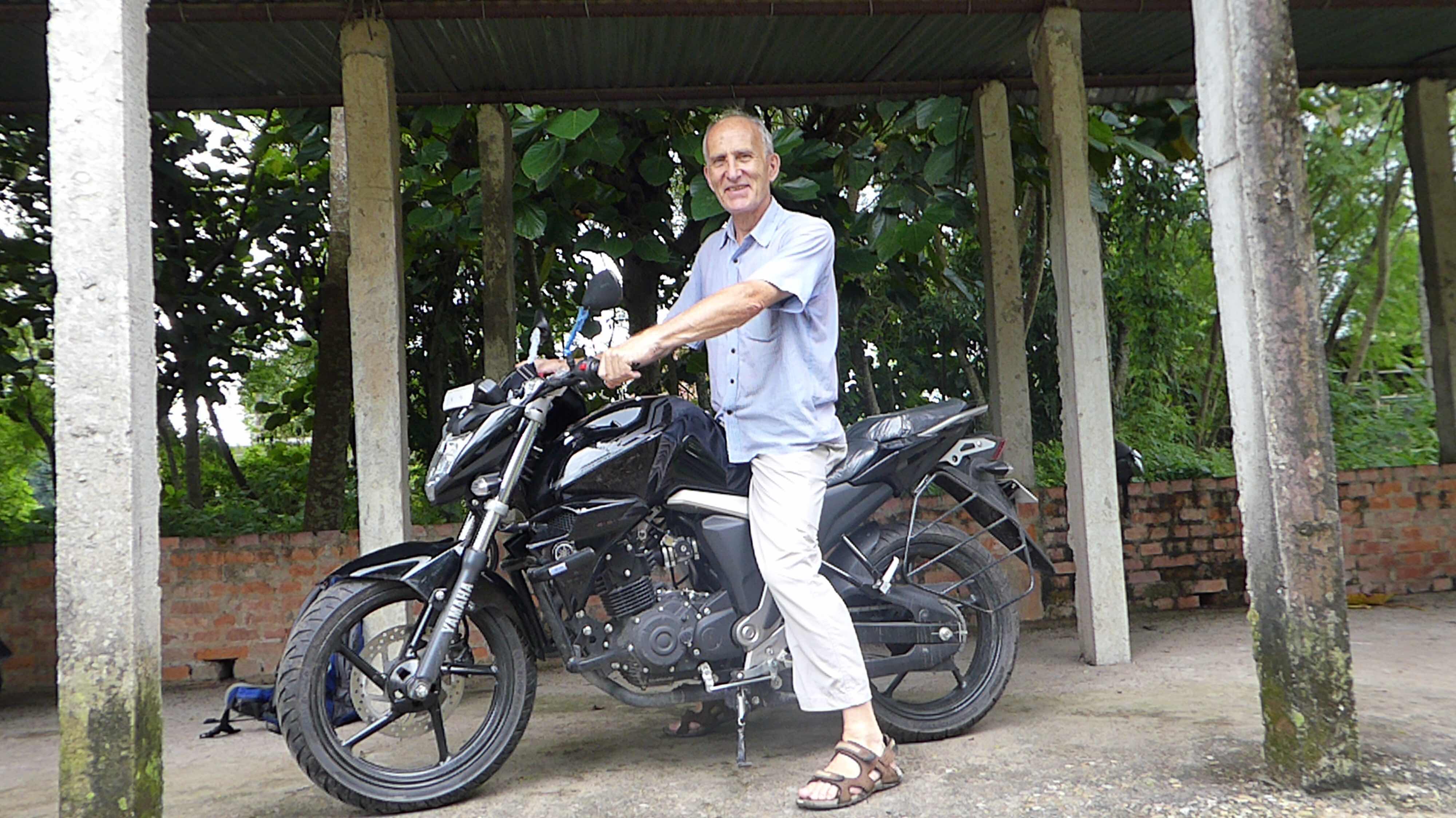
I am fortunate to have found a comfortable home-stay to live ... but bus transport into work is slow and infrequent ... so I was grateful when the university purchased a new motorcycle for me to use while here!

This is the motorcycle shelter where I park my bike when I am at work.


Before you ask, it is a Yamaha FZN150 with a single cylinder 153cc air-cooled 4-stroke SOHC 2-valve engine and a 5-speed gearbox, 128Nm torque and 13.1PS power.

... and, it has telescopic front suspension, monocross rear suspension, disc front brakes and rear drum brakes.

... and, weighs 132kg ... (... plus 12kg when the petrol tank is full)!

Moreover ... it is light enough to manoeuvre through the chaotic urban traffic ... and powerful enough to take me comfortably into work.

You can see my office window behind my shoulder in this photo.


In fact, although the road surface into work is quite good, 60kph is the maximum safe speed to drive at ... coz you never know what could suddenly enter the road from apparently nowhere ... another driver ... or a goat, dog or pedestrian!

My bike has a red button on the handlebars that I’m not quite sure about. It is marked PASS in large bold lettering ... but I don’t know when to use it. If you press the button, the headlamp flashes. Is this supposed to invite oncoming traffic to overtake? ... or does it inform oncoming traffic that I am about to overtake? Given the uncertainty, I think I’ll not use it at all!


I brought my safety helmet with me from Australia ... coz the helmets here do not meet international standards ... and accident insurance does not cover riders without approved helmets.

What I did buy here though, is a pair of (un)sexy long sleeves to protect my arms from the sun. I think some creative entrepreneur modified a set of calf-length ladies stockings by cutting off the toes and sewing in a hole for the thumb, in order to make a pair of sleeves instead.


What do you think? 

... and I have no idea what the SPF u/v rating is!


This is me in front of my lodgings. 

Actually, the sleeves don’t look too bad in the photo.

Perhaps I will look for a black fishnet pair next time ... !


Sunday, 16 September 2018

The temple ... with Snakes and Ladders !

Nepal has many ancient temples. This weekend, I visited a Hindu temple that opened less than 2 years ago: Shashwat Dham temple. It is less than 30km from where I live. It is also called CG Temple because it was built entirely by the richest businessman in Nepal: Binod Chaudhary, chairman of the CG business group. Does this mean he will be welcome into Hindu Heaven with open arms? Perhaps he will; because he is a generous philanthropist as well as an industrialist.


The temple is dedicated to Krishna; the God of compassion, tenderness and love. He is often depicted with black, dark or blue skin. Here he is as a newborn being carried across the river.


He grew up to be a bit of a womaniser ... and had eight wives. Here, he entertains some of them.


He also danced on the hood of the multi-headed cobra ...


... and fought as a brave charioteer.


Cameras are not prohibited in the temple grounds ... but smartphones are ok ... so everyone used them to take photos instead! Here is a photo of some detail on the outside of the temple building.


An example of the religious symbiosis that exists here, is the inclusion of a statue of Buddha ...


... as well as prayer flags in the Hindu temple grounds.


A different style of artwork appears on the cafe wall. This was created by a minority indigenous group of women who live in a remote region in Nepal. It tells a story ... but I am sorry I’ve forgotten what it is!


Some outdoor parks in Australia, and elsewhere, have a large checkerboard marked out on the ground where people can play a game of chess. Well, instead of this, Shashwat Dham has a concrete area marked out to play Leela. This is an ancient Hindu game with the intention of teaching moral values. It is the precursor of Snakes and Ladders. I bet you didn’t know that!


Namaste!